Recovery from addiction presents unique obstacles for women that differ significantly from men’s experiences. Women entering addiction treatment face multiple barriers including higher rates of trauma-related symptoms and reduced access to specialized care. Biological differences, particularly hormonal fluctuations, can intensify cravings and complicate the recovery process. Understanding these gender-specific challenges is crucial for developing effective treatment approaches that address the complex interplay between physical, emotional, and psychological factors affecting women’s recovery journeys.
Understanding the Biological Foundation of Women’s Recovery
How Do Hormones Affect Women’s Recovery from Addiction?
Sex hormones make women more sensitive to substance use, leading to different cardiovascular and neurological effects compared to men. Women’s hormonal cycles create unique challenges throughout recovery.
Key hormonal impacts include:
- Estrogen fluctuations affecting dopamine sensitivity and reward pathways
- Progesterone changes influencing GABA receptors and anxiety levels
- Cortisol variations during menstrual cycles intensifying stress responses
- Menopause-related shifts creating additional vulnerability periods
The Menstrual Cycle and Craving Patterns
Fluctuating hormones can intensify cravings and emotional responses, making holistic treatment plans crucial. Many women report increased vulnerability to relapse during specific menstrual phases.
Critical phases include:
- Premenstrual week when estrogen drops rapidly
- Ovulation period with hormonal peaks
- Early menstrual phase with combined hormone declines
Trauma: The Hidden Driver of Women’s Addiction
What Role Does Trauma Play in Women’s Substance Use?
A large majority of women entering addiction treatment present significant symptoms of trauma related to physical or sexual abuse. This connection between trauma and addiction creates complex recovery challenges.
Common trauma types affecting women:
- Sexual assault and abuse (childhood and adult)
- Domestic violence and intimate partner abuse
- Emotional and psychological trauma
- Medical trauma and reproductive health issues
- Intergenerational trauma patterns
Why Is Trauma-Informed Care Essential for Women?
Trauma and addiction should be treated simultaneously using individual therapy, group therapy, and medication management. Traditional addiction treatment often fails women when trauma remains unaddressed.
Benefits of trauma-informed approaches:
- Reduces re-traumatization during treatment
- Addresses root causes of addictive behaviors
- Builds genuine coping mechanisms
- Creates safer therapeutic environments
Gender-Specific Barriers to Recovery Access
What Unique Challenges Do Women Face in Seeking Treatment?
Women with substance use disorder face multiple barriers in accessing treatment and are less likely than men to seek specialized addiction programs. While women are addicted at nearly the same rate as men, the stigma attached to addiction for women is far greater.
Primary access barriers:
- Childcare responsibilities preventing treatment participation
- Financial constraints limiting treatment options
- Social stigma creating shame and secrecy
- Healthcare provider bias leading to misdiagnosis
- Transportation issues affecting rural and low-income women
How Does Stigma Differently Impact Women in Recovery?
Gender-specific stigma toward substance use creates additional barriers to recovery for women. Society often judges women with addiction more harshly than men.
Stigma manifestations include:
- Moral judgments about motherhood and substance use
- Professional consequences affecting career advancement
- Family relationship strain and custody concerns
- Healthcare discrimination affecting quality of care
The Role of Relationships in Women’s Recovery
How Do Relationships Affect Women’s Recovery Journey?
Women’s recovery often centers around relationship dynamics more than men’s. Relationship factors significantly influence treatment retention and success for women.
Key relationship considerations:
- Codependent patterns requiring specific intervention
- Enabling family dynamics that must be addressed
- Romantic relationships that may trigger or support recovery
- Mother-child bonds affecting treatment motivation
Building Healthy Support Networks
Essential network components:
- Trauma-informed therapists and counselors
- Women-specific support groups and peer networks
- Family members educated about addiction and recovery
- Healthcare providers specializing in women’s issues
Self-Care Strategies Tailored for Women
What Self-Care Practices Best Support Women’s Recovery?
Simple routines like regular personal hygiene, dental care, and grooming play pivotal roles in boosting self-esteem and mental health. The best self-care strategies include setting boundaries, exercising, yoga or nature therapy, and finding creative outlets.
Physical Self-Care for Recovery
Daily wellness practices:
- Consistent sleep schedules supporting hormonal balance
- Regular exercise reducing stress and improving mood
- Nutritious meals stabilizing blood sugar and brain chemistry
- Hydration supporting detoxification processes
Emotional and Mental Self-Care
Psychological wellness strategies:
- Mindfulness and meditation practices
- Journaling for emotional processing
- Creative expression through art, music, or writing
- Boundary setting in relationships and work
Hormonal Health Management
Specialized women’s health approaches:
- Regular gynecological care and hormone testing
- Natural hormone balancing through nutrition
- Stress management techniques reducing cortisol
- Sleep optimization supporting hormone production
Co-Occurring Mental Health Disorders
Why Are Co-Occurring Disorders More Common in Women?
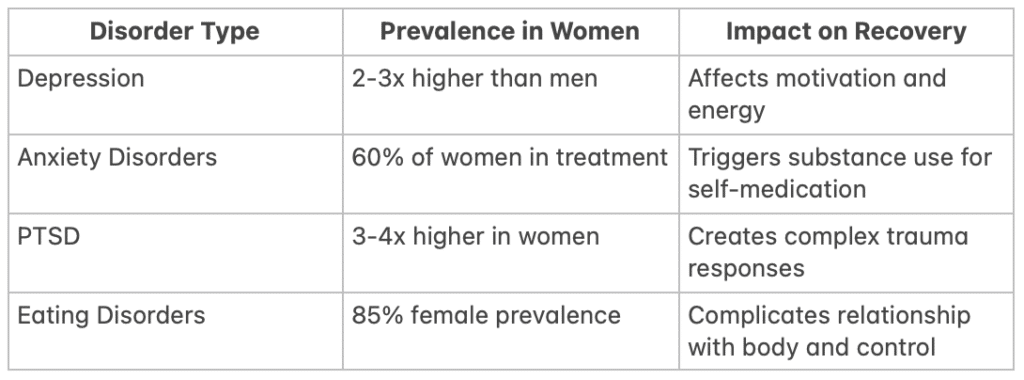
Women experiencing co-occurring disorders require integrated treatment approaches addressing both mental health and addiction simultaneously. Women show higher rates of anxiety, depression, and eating disorders alongside addiction.
Common co-occurring conditions:
Integrated Treatment Approaches
Essential treatment components:
- Simultaneous mental health and addiction therapy
- Medication management for dual diagnoses
- Specialized trauma therapy modalities
- Nutritional counseling and body image work
Pregnancy and Reproductive Health in Recovery
How Does Pregnancy Affect Women’s Recovery?
Pregnancy presents unique challenges and opportunities in women’s recovery journeys. Sexual health services should address family planning, protection from sexually transmitted diseases, and fluctuating hormonal levels.
Pregnancy-specific considerations:
- Medication adjustments for safety during pregnancy
- Enhanced prenatal care and monitoring
- Addressing fears about child custody and parenting
- Managing guilt and shame related to substance use during pregnancy
Reproductive Health Throughout Recovery
Key health areas:
- Regular gynecological screenings and preventive care
- Birth control counseling and family planning support
- Menopause management for older women in recovery
- Sexual health education and trauma-informed care
Creating Safe Spaces for Women’s Recovery
What Makes Treatment Environments Safer for Women?
Gender-specific options such as housing, peer support groups, and same-sex provider teams help create safe environments for women to focus on treatment.
Safety features include:
- Women-only treatment tracks and housing
- Female therapists and medical providers
- Trauma-informed facility design and policies
- Childcare services and family support programs
Peer Support and Community Building
Community elements supporting women:
- Women’s recovery circles and group therapy
- Mentor relationships with women in long-term recovery
- Family support groups addressing women’s specific needs
- Online communities and virtual support networks
Addressing Barriers to Long-Term Recovery
What Are the Biggest Obstacles to Sustained Recovery for Women?
Barriers include criminalization of substance use, gender-specific stigma, and physiological effects of trauma on coping and resilience.
Primary long-term challenges:
- Financial instability affecting housing and healthcare access
- Employment discrimination limiting economic opportunities
- Ongoing trauma triggers in daily environments
- Healthcare gaps between addiction and women’s health services
Building Resilience and Coping Skills
Resilience-building strategies:
- Trauma therapy developing healthy coping mechanisms
- Life skills training for practical daily management
- Educational and vocational support for economic independence
- Spiritual and mindfulness practices for inner strength
Holistic Approaches to Women’s Recovery
How Can Holistic Methods Support Women’s Recovery?
Comprehensive recovery approaches address the whole person rather than just the addiction. Ongoing assessments allow therapies to be refined to meet individual women’s changing needs.
Holistic treatment components:
- Mind-body therapies like yoga and meditation
- Nutritional counseling supporting physical healing
- Creative arts therapy for emotional expression
- Alternative medicine complementing traditional treatment
Integrating Traditional and Alternative Approaches
Balanced treatment models include:
- Evidence-based therapy combined with wellness practices
- Medical care integrated with holistic health approaches
- Peer support enhanced by professional counseling
- Family therapy incorporating cultural and spiritual elements
Prevention and Early Intervention Strategies
How Can We Better Identify At-Risk Women?
Early identification and intervention can prevent addiction progression and reduce recovery complexity.
Risk identification factors:
- History of trauma or abuse
- Mental health symptoms in adolescence
- Family addiction patterns
- Prescription medication dependency
- Life transitions and hormonal changes
Community-Based Prevention Programs
Effective prevention approaches:
- School-based education addressing girls’ specific vulnerabilities
- Healthcare provider training on addiction risks in women
- Community support programs for at-risk mothers
- Workplace policies supporting women’s mental health
The Future of Women’s Recovery Treatment
What Innovations Are Improving Women’s Recovery Outcomes?
Treatment approaches continue evolving to better serve women’s unique needs.
Emerging developments:
- Telehealth expanding access to specialized women’s services
- Hormone therapy integration with addiction treatment
- Trauma-informed medication-assisted treatment
- Technology-supported peer recovery coaching
Research and Evidence-Based Improvements
Areas of ongoing research:
- Gender-specific medication dosing and effectiveness
- Hormonal cycle impacts on treatment timing
- Cultural factors affecting women’s recovery across communities
- Long-term outcomes of women-specific treatment approaches
Building Your Personal Recovery Plan
What Should Women Include in Their Recovery Planning?
Effective recovery plans address women’s multifaceted needs and changing circumstances.
Essential plan components:
- Medical care including hormonal and reproductive health
- Mental health support addressing trauma and co-occurring disorders
- Social support through women-specific groups and relationships
- Practical support for childcare, housing, and employment
- Spiritual care aligning with personal beliefs and values
Monitoring Progress and Adjusting Strategies
Recovery monitoring includes:
- Regular check-ins with healthcare providers
- Tracking mood patterns relative to menstrual cycles
- Assessing stress levels and coping effectiveness
- Evaluating relationship health and boundary maintenance
Frequently Asked Questions About Women’s Recovery
Do women recover differently from men?
Yes, women typically require longer treatment periods and benefit from trauma-informed, relationship-focused approaches that address hormonal and biological differences affecting addiction and recovery.
How do hormones impact relapse risk?
Hormonal fluctuations during menstrual cycles, pregnancy, and menopause can increase vulnerability to cravings and emotional triggers, requiring specialized monitoring and support during these periods.
What self-care practices are most effective for women in recovery?
Research shows that combining physical care (sleep, nutrition, exercise), emotional support (therapy, peer groups), and boundary-setting practices creates the strongest foundation for sustained recovery.
How important is trauma treatment in women’s recovery?
Trauma treatment is essential since most women in addiction recovery have histories of abuse or trauma that directly contribute to substance use patterns and must be addressed for successful long-term recovery.
Professional Support at All the Way Well
At All the Way Well, we understand that women’s recovery journeys require specialized, compassionate support that addresses the unique challenges they face. Our peer recovery coaching services are designed specifically to support women through every stage of recovery and sober living.
Our experienced team provides personalized guidance that acknowledges the complex relationship between trauma, hormonal health, and addiction recovery. We offer ongoing support that helps women develop sustainable self-care practices, build healthy relationships, and navigate the specific obstacles that can threaten long-term sobriety.
Through our comprehensive approach, we help women create recovery plans that honor their individual needs while connecting them with community resources and peer networks. Our coaches understand firsthand the challenges women face in recovery and provide the accountability, encouragement, and practical strategies necessary for building a fulfilling sober life. Whether you’re just beginning recovery or working to strengthen existing sobriety, All the Way Well offers the specialized support that recognizes and addresses the unique aspects of women’s recovery experiences.